Micropayments put unusual pressure on blockchain infrastructure. When a transaction is worth only a few cents, even a small network fee can make the payment uneconomical. Speed and fee predictability matter just as much when users expect a tip, digital purchase, or API payment to complete immediately.
QIE Blockchain is one option for micropayment applications where low transaction costs, fast finality, and EVM compatibility are priorities.
QIE offers an average transaction fee of about $0.0001, block finality under two seconds, and 25,000+ TPS capacity. Other networks, including Solana, Stellar, Bitcoin Lightning, TRON, Base, Arbitrum, and Polygon PoS, address different micropayment requirements.
Quick answer: best blockchains for micropayments
The right blockchain depends on the payment model, asset, transaction volume, and user experience your application requires.
The Shortlist
- QIE Blockchain: Relevant for tipping, pay-per-use apps, gaming, and agent payments where low published transaction costs, fast finality, EVM compatibility, and identity features are priorities.
- Solana: Relevant for high-volume payments and consumer applications that can use its SVM-based ecosystem and low base fees.
- Stellar: Well suited to payment and stablecoin applications, particularly cross-border transfers and financial infrastructure.
- Bitcoin Lightning: Designed for fast Bitcoin-native payments and small transfers without requiring every payment to settle directly on Bitcoin’s base layer.
- TRON: Relevant for stablecoin-heavy payment flows and applications that use its Bandwidth and Energy resource model.
- Base: Relevant for Ethereum-aligned payment applications, stablecoins, and teams that want an EVM-compatible Layer 2.
- Arbitrum and Polygon PoS: Useful options for teams that want Ethereum-compatible development environments with lower transaction costs than Ethereum mainnet.
For micropayments, compare more than the headline fee. Fee behavior under load, finality, stablecoin support, gas sponsorship, developer tooling, and the need for users to hold a separate gas token can have a bigger impact on the real payment experience.
Why micropayments are difficult for traditional payment rails
Card payment economics can make very small transactions difficult to support profitably. Processing costs can include percentage-based fees and fixed components, while merchants and payment providers also have to account for fraud, disputes, and other operational costs.
For a $0.10 tip or a small pay-per-use charge, even a modest processing cost can represent a meaningful share of the transaction.
Blockchain payment networks use a different cost structure. Some networks can confirm or finalize transactions within seconds and support transfers that cost fractions of a cent, depending on the network and transaction type.
That can make smaller payments practical for tipping widgets, pay-per-article models, in-game purchases, IoT metering, and machine-to-machine payments.
The important distinction is that not every blockchain has the same fee model or settlement speed. A micropayment application needs infrastructure where transaction costs remain economically viable for the value being transferred.
What makes a blockchain good for micropayments?
A workable micropayments chain needs more than a low advertised fee. The fee should be economically viable for small transactions, while confirmation times and payment mechanics should fit the application’s user experience.
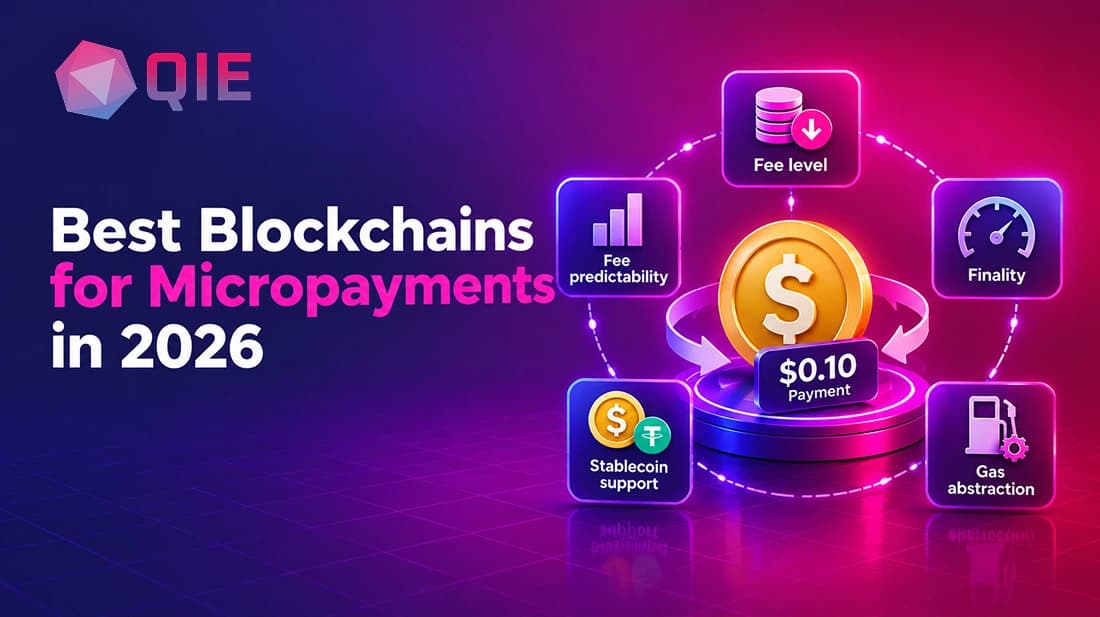
Five factors matter most:
- Fee level: The transaction cost needs to remain small relative to the payment value.
- Fee predictability: Costs should remain manageable when network demand increases.
- Finality: A tip or purchase should confirm quickly enough to keep the interaction moving.
- Stablecoin support: Stablecoins can make pricing easier when users and merchants think in dollars or other fiat currencies.
- Gas abstraction: Sponsored fees or other payment mechanisms can prevent users from needing to acquire a separate network token before making a payment.
A chain can look extremely cheap during quiet periods and still create problems if fees rise sharply during congestion. That is why production testing should use the same transaction type and realistic network conditions rather than relying on a single headline fee.
Fee floors and fee predictability
The fee floor is the minimum realistic cost a transaction can incur under a network’s fee model. For micropayments, that number matters because a fee that seems small for a $10 transaction can become significant for a $0.10 payment.
QIE currently publishes an average transaction fee of about $0.0001 and describes its network as having near-zero gas costs. Its developer documentation also lists 25,000+ TPS capacity and block finality under two seconds.
These figures should be compared with other networks using equivalent transaction types and measurement periods.
Fee models differ significantly across networks. Solana, for example, uses a base fee plus an optional prioritization fee. The priority fee can increase when applications compete for block space.
For micropayments, the important question is therefore not simply "Which chain has the lowest fee?" It is "Which fee model keeps the payment economical and predictable for the transaction volume we expect?"
Finality, stablecoins, and gas tokens
Finality speed determines how quickly a payment can become usable by the application. QIE has block finality under two seconds, which can fit interactions where a user expects a payment or in-game action to confirm quickly.
Stablecoin support matters because many micropayment applications price goods and services in dollars rather than a volatile native token. Stablecoins can make a $0.10 tip or $0.50 API request easier to price and account for.
Gas abstraction matters for a different reason. If a first-time user needs to buy a separate network token before making a small payment, that additional step can introduce unnecessary friction. Some networks and payment architectures allow another account or service to sponsor the network fee.
Solana, for example, supports a designated fee payer that can cover transaction fees on behalf of the sender.
How do the top blockchains compare for micropayments?
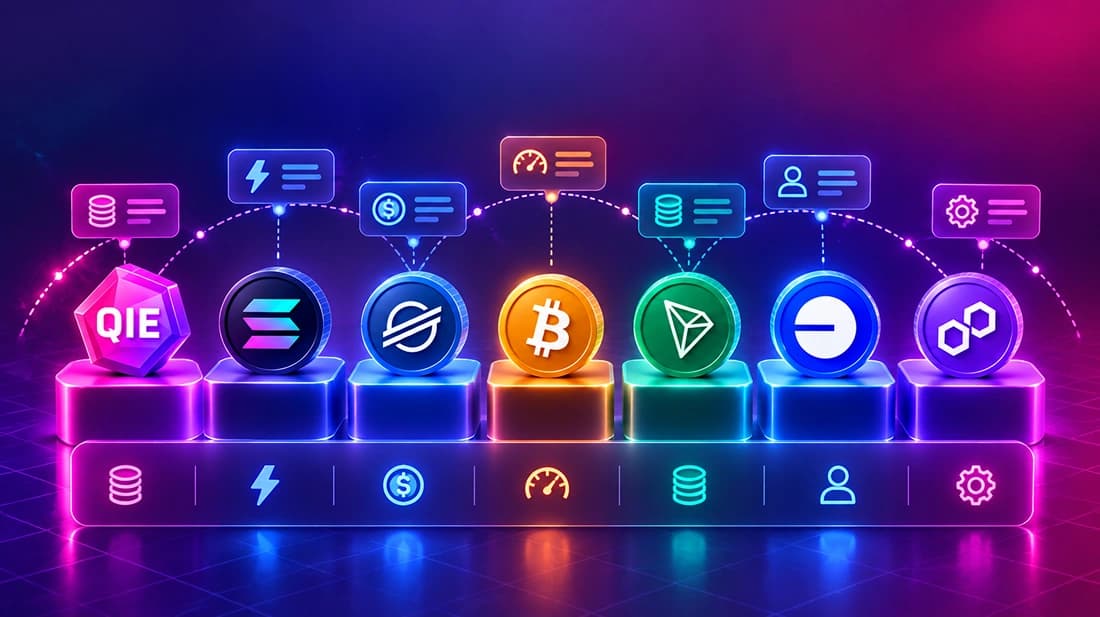
The table below focuses on the factors that matter most when evaluating infrastructure for micropayments.
| Chain | Typical transfer cost | Finality | Stablecoins | Payment UX | Best for |
|---|---|---|---|---|---|
| QIE Blockchain | ~$0.0001 avg | <2s block finality | Supported via EVM contracts | QIE ID as payment address | Tipping, agent payments, pay-per-use apps |
| Solana | Low, varies with priority fees | Fast confirmation | USDC, PYUSD live | Partial (fee payer programs) | High-volume consumer and NFT apps |
| Stellar | Very low, varies by conditions | 3 to 5 seconds | Native stablecoin rails | Built-in fee sponsorship | Cross-border remittance |
| Bitcoin Lightning | Typically very low | Near-instant | Limited | No, needs BTC channel | Bitcoin-native tips |
| TRON | Low, varies by resources | ~3 seconds | Largest USDT volume | Energy delegation | Stablecoin-heavy regions |
| Base / Arbitrum | Sub-cent to low cents, varies with L1 conditions | Seconds to minutes | USDC and other stablecoins | ERC-4337 paymasters | Coinbase-adjacent, Ethereum security |
| Polygon PoS | Low cents | ~2 to 5 seconds | Wide stablecoin support | Meta-transactions common | Existing Ethereum tooling teams |
Fee and performance figures should not be treated as directly comparable unless they use the same transaction type, measurement period, and methodology. For example, Solana’s official documentation distinguishes its base fee from optional prioritization fees, while QIE publishes an average transaction fee alongside its network capacity and finality figures.
QIE combines EVM compatibility, low published transaction costs, fast block finality, and QIE identity features. Its developer documentation says existing Solidity contracts can be deployed using familiar tools such as MetaMask, Hardhat, Remix, and Truffle.
Solana uses a different execution environment and fee model. Its documentation specifies a base fee plus optional priority fees, while its production guidance notes that priority fees become relevant when block space is competitive.
Base is another relevant option for payment applications. Its current payments documentation highlights low-fee stablecoin payments, agentic payments, and x402 compatibility.
The right choice therefore depends on the payment asset, expected transaction volume, fee requirements, developer environment, and user experience rather than one universal fee or TPS number.
How to choose a blockchain for micropayments
Run five checks before committing to an architecture.
1. Test the fee under realistic load. Don’t compare only the advertised average fee. Simulate the transaction type your application will actually use and test it during periods of higher demand.
2. Match finality to the interaction. A social tip or in-game purchase may need confirmation within a few seconds. An IoT settlement workflow may tolerate a longer confirmation period.
3. Check stablecoin support. If the application charges users in dollars, determine which stablecoins are supported, where liquidity comes from, and how users will acquire them.
4. Check the gas experience. Determine whether users need a native gas token or whether the application can sponsor fees. This can make a significant difference to first-time payment flows.
5. Evaluate the development environment. EVM compatibility can allow teams to reuse Solidity contracts and familiar development tools. Other networks use different execution environments and may require different languages or infrastructure.
Here’s how that plays out for a real build. Say a tipping app expects 10,000 tips a day at $0.10 each, roughly $1,000 in daily volume moving through the contract. Run the load test first. At that volume, the app needs a fee model that remains economically viable during peak traffic, not just during quiet periods.
How do apps hide blockchain fees from users?
Apps can hide network fees through several mechanisms.
Sponsored fees allow the application or another account to pay the network fee on behalf of the user. Solana, for example, supports a designated fee payer that can sponsor transaction fees.
Paymasters are an account-abstraction mechanism used in EVM ecosystems to let a third party sponsor eligible transaction costs.
Embedded wallets can also keep wallet creation and transaction signing inside the application instead of requiring users to manage a separate wallet interface.
The exact implementation depends on the network and wallet architecture, so teams should verify the supported mechanism before designing the payment flow around it.
Where are micropayments being used?
Micropayments can support several emerging application models:
- Tipping: Small payments to creators, developers, or service providers.
- Pay-per-article: Users pay a small amount to access individual pieces of content.
- Gaming: Players pay for digital items, consumables, or other in-game actions.
- IoT: Connected devices can settle small machine-to-machine payments.
- API payments: Developers or applications can pay for individual requests instead of committing to a subscription.
- Agent payments: AI agents can pay for services or API requests programmatically.
Agentic payments are becoming particularly relevant to this discussion. Base’s current payment documentation highlights x402 compatibility, allowing agents to pay for requests rather than relying on conventional API keys or subscription models.
For teams building these applications, the infrastructure decision should come down to the economics and technical requirements of the specific payment flow.
Conclusion
The right blockchain for micropayments depends on transaction costs, fee predictability, finality, stablecoin support, and payment UX. QIE is relevant for teams looking for low transaction costs, fast finality, and EVM compatibility, while Solana, Stellar, Lightning, TRON, Base, Arbitrum, and Polygon offer different approaches.
Before choosing a network, test actual transaction costs and confirmation times under realistic traffic. For micropayments, keeping fees low and predictable becomes increasingly important as transaction volume grows.
Key Takeaways
- Micropayments need transaction costs that stay small relative to the payment value.
- Fee predictability, finality, stablecoins, and payment UX matter alongside the headline fee.
- QIE combines an average transaction fee of about $0.0001, <2-second finality, 25,000+ TPS capacity, and EVM compatibility.
- Solana, Stellar, Lightning, TRON, Base, Arbitrum, and Polygon offer different approaches to micropayment infrastructure.
- Sponsored fees and other payment-abstraction methods can reduce friction for users who do not hold a gas token.
- Test actual transaction costs and confirmation times under realistic traffic before choosing a blockchain.
Building a tipping app, pay-per-use service, or agent payment system?
Explore QIE’s EVM-compatible blockchain, test its transaction model, and see whether it fits your application’s payment requirements.
Frequently Asked Questions
There is no single best blockchain for every micropayment application. QIE is a relevant option for applications that prioritize low transaction costs, fast finality, EVM compatibility, and identity features. Solana, Stellar, Lightning, TRON, Base, Arbitrum, and Polygon offer different approaches depending on the payment asset, application, and technical requirements.
No, not on every chain. Some networks and payment architectures support sponsored fees or other fee-abstraction mechanisms that allow an application or third party to cover the network fee. The exact implementation varies by blockchain.
Both networks can support low-cost transactions, but their fee models differ. Solana uses a base fee plus optional prioritization fees, while QIE has an average transaction fee of about $0.0001. Actual costs should be compared using the same transaction type and network conditions.
A Solidity-based paywall can be built on EVM-compatible networks such as QIE, Base, Arbitrum, and Polygon PoS. The amount of work required depends on the contract, stablecoin, wallet, and network-specific integrations.
Micropayments generally refer to very small-value transactions, such as tips, content access, or API payments. Nanopayments refer to even smaller transactions, where extremely low and predictable fees become more important.
Lightning shines for Bitcoin-native tips but lacks native stablecoin rails and smart contract flexibility, so it fits narrow use cases better than general-purpose micropayment apps.