Most XRP holders assume any reputable wallet will do the job. The XRP Ledger disagrees. Its 1 XRP base reserve, destination tag requirements, and trust-line mechanics trip up generic wallets constantly: users try to send their full balance, the transaction fails, and they assume their funds are gone.
The XRP is still in the account, but part of the balance is reserved to keep the account active, and many wallets don’t explain that clearly.
The five wallets below are ranked specifically for how well each handles these XRPL realities.
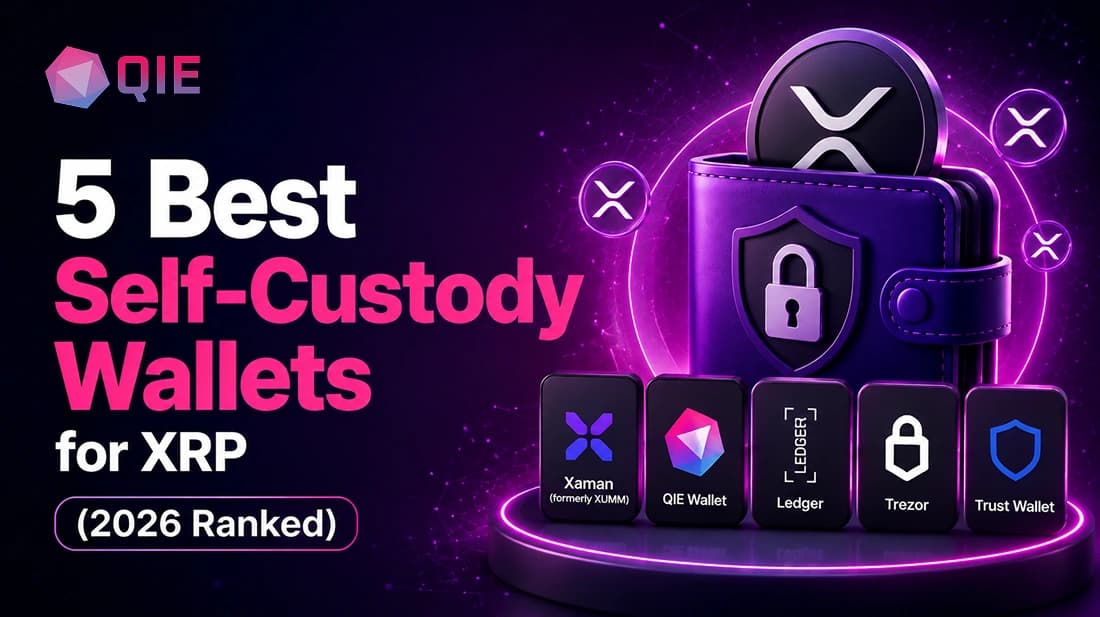
Quick Answer: The 5 Best Self-Custody XRP Wallets
If you just want the shortlist, here it is. All five are non-custodial, meaning you hold the private keys directly, and each one fits a different type of XRP holder:
The Shortlist
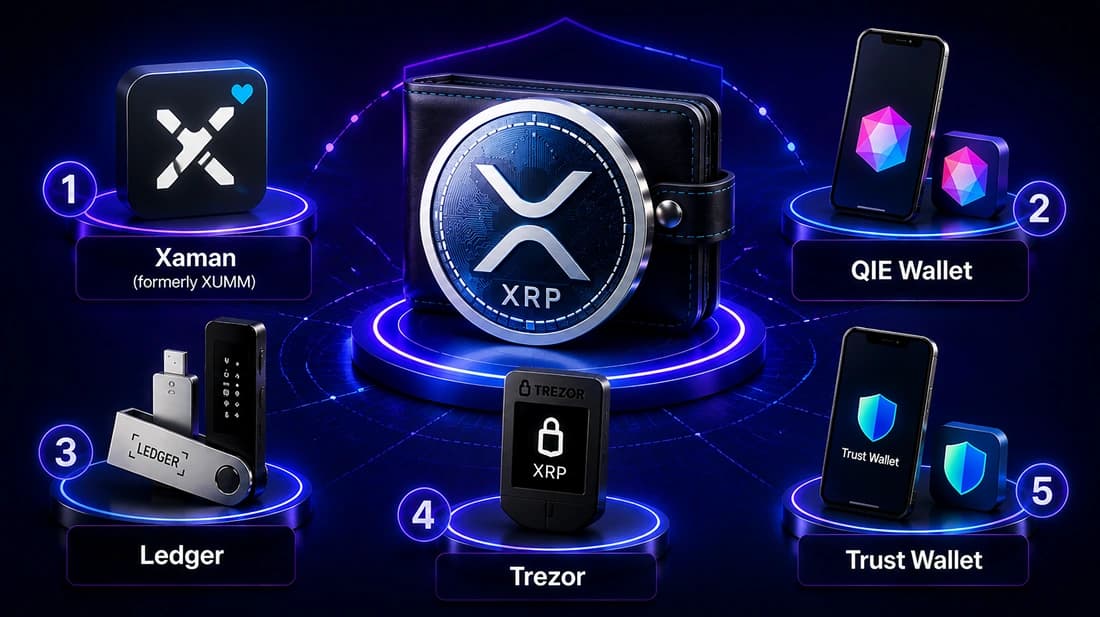
- Xaman (formerly XUMM): best for XRPL power users, DEX and AMM traders
- QIE Wallet: best for holders who want XRP and other assets in one non-custodial app
- Ledger: best for cold storage of large XRP holdings
- Trezor: best open-source hardware alternative
- Trust Wallet: best for mobile multichain beginners
Why Self-Custody Matters for XRP Holders
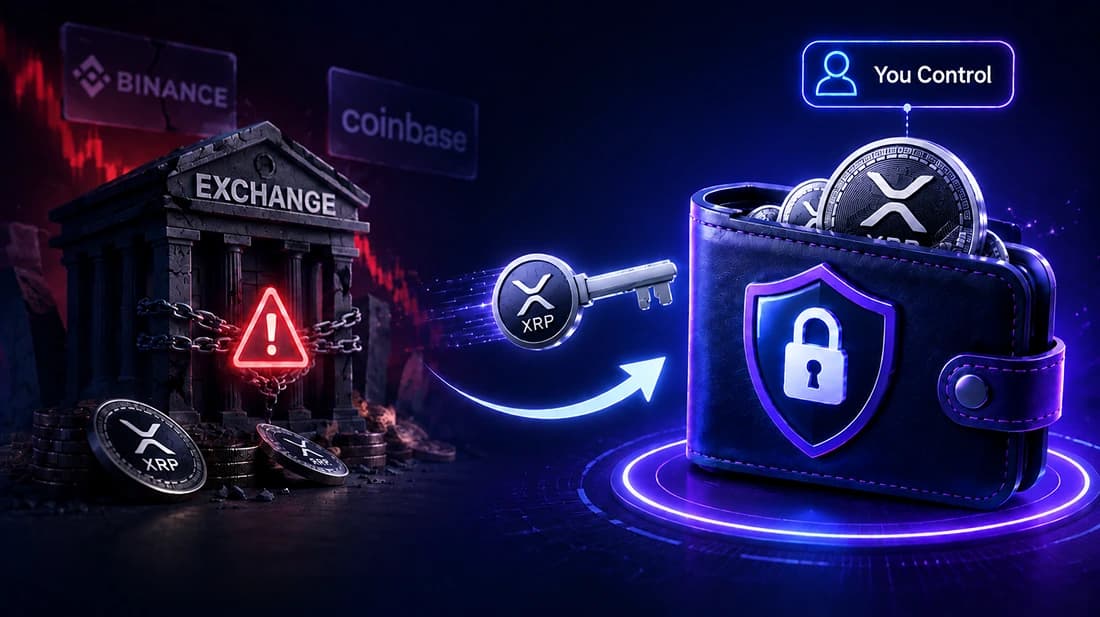
Moving XRP off an exchange is the single most important step an XRP holder can take. When your coins sit on a centralized platform, you hold an IOU.
The exchange controls withdrawal access, and history has shown repeatedly that access can disappear without warning.
What to Look for in a Self-Custody XRP Wallet
The XRPL base reserve is 1 XRP per account, with a 0.2 XRP owner reserve for each additional ledger object such as trust lines or open orders. Unlike transaction fees, XRP reserves are locked in your account to keep it active rather than burned.
Many generic wallets display your total balance without flagging how much is locked, which catches new self-custody users off guard when they try to send everything they see.
Destination tags are the second common failure point. They’re required when sending XRP to custodial platforms that use shared deposit addresses. Miss one, and your XRP lands in a shared pool with no practical recovery path.
A wallet that surfaces this field clearly, rather than burying it in advanced settings, is worth the extra attention.
How We Evaluated These Five Wallets for XRP Holders
Five criteria drove every ranking here: XRPL-native support versus generic multichain handling; security model (hardware cold storage versus software hot wallet); backup standard (BIP-39 seed phrase or proprietary); destination tag visibility; and ease of use for both beginners and power users.
Every wallet on this list is non-custodial, meaning you hold the private keys directly with no third party able to freeze or access your funds. A wallet that looks self-custodial but routes signing through a company server is a different product entirely, and none of those made the cut.
The Five Best Non-Custodial XRP Wallets, Ranked by Use Case
1. Xaman (formerly XUMM): Best for XRPL Power Users
Xaman is a non-custodial mobile wallet built for the XRP Ledger, first launched in 2021 under the name XUMM before rebranding to Xaman in 2023. It’s the community standard for a reason: no other software wallet understands XRPL as deeply.
Xaman supports trust lines, DEX trading, NFTs, AMM interactions, and Hooks natively. Destination tags appear prominently on every send screen. The built-in xApp ecosystem connects directly to XRPL DEXs and NFT marketplaces without leaving the app.
Pro: Full XRPL-native feature set, including AMM and DEX access in one interface.
Con: XRP-only focus means you need a separate wallet for Bitcoin, Solana, or EVM assets.
2. QIE Wallet: Best for XRP Plus Multichain Identity
QIE Wallet’s self-custody wallet generates your keys on-device and backs everything up with a single 12-word BIP-39 phrase. It supports XRP natively alongside Bitcoin, Solana, Tron, and EVM chains, so one seed phrase covers all of them.
What sets it apart from Trust Wallet is the identity layer. QIE Wallet supports dApps and includes a reusable decentralized identity called QIE ID.
Verify once, and that identity carries across partner exchanges and applications, eliminating repeated KYC checks. Every user also gets a free web3 ID wallet address, a human-readable name that replaces the long address string you’d otherwise copy-paste.
The crypto swap and network-adding features let you move between XRP and other assets without leaving the app. For staking, locking QIE tokens unlocks discounts and free subscriptions to partner apps.
Pro: Single seed phrase across XRP, Bitcoin, Solana, and EVM chains; no KYC required for core use; free QIE ID gives you a human-readable address and eliminates repeated verification.
Con: Not XRPL-native like Xaman, so heavy DEX or AMM traders may still want Xaman alongside it for advanced ledger interactions.
3. Ledger: Best for Cold Storage
Paired with a Ledger hardware device, the Ledger Wallet app creates a secure XRP wallet while private keys remain isolated in cold storage. Your signing key never touches an internet-connected chip, which is the core security advantage.
The Ledger Live ecosystem provides a unified interface for buying, swapping, and staking across a broad range of assets. For XRP specifically, pairing a Ledger device with Xaman via XRP Toolkit gives you cold-storage signing with XRPL-native transaction clarity, and that combination is one of the strongest security setups available.
Pro: Private keys stored in a certified Secure Element chip, fully offline.
Con: Physical hardware creates a real barrier for mobile-first users, and in-app swapping fees in the Ledger Live ecosystem can run 1–2% above network costs.
4. Trezor: Best Open-Source Hardware Alternative
Trezor is the original hardware wallet: self-custody, open-source, and built entirely around keeping your private keys offline. Every model in the current Safe lineup includes an EAL6+ secure element, and all firmware is fully open-source and publicly auditable. That transparency matters to users who want to verify what their signing device is actually doing.
One important caveat: the Model One does not support XRP. You need a Safe 3, Safe 5, or Safe 7 for XRP self-custody. For privacy-focused holders who want to audit every line of code on their signing device, the open-source firmware is Trezor’s genuine edge over Ledger.
Pro: Fully auditable open-source firmware; no account required to set up.
Con: Older Model One lacks XRP support; iPhone users get a limited experience on most models.
5. Trust Wallet: Best for Mobile Multichain Beginners
Trust Wallet is a free non-custodial hot wallet built around consolidation: one app holding Bitcoin, EVM chains, Solana, and TON where other setups make you juggle a wallet per ecosystem. It supports 100+ blockchains natively, including the XRP Ledger, alongside Bitcoin, Ethereum, Solana, TRON, and the major L2s.
The mobile UX and built-in dApp browser make it genuinely approachable for someone moving off an exchange for the first time. The trade-off is that Trust Wallet treats XRPL as one chain among many, so advanced features like trust-line management or AMM positions require going elsewhere.
Pro: Free, beginner-friendly, covers multiple network standards in one app.
Con: No XRPL-native tooling; the browser extension has logged security incidents separate from the mobile app.
Quick Comparison Table
| Wallet | Type | XRPL-Native? | Multichain? | Best For | Backup Standard | Cost |
|---|---|---|---|---|---|---|
| Xaman | Software hot wallet | Yes | No | XRPL DEX/AMM power users | Native XRPL Formats + BIP-39 | Free |
| QIE Wallet | Software hot wallet | No | Yes | XRP + multichain + reusable identity | BIP-39 | Free |
| Ledger | Hardware cold storage | No | Yes (15,000+ assets) | Large XRP holdings, cold vault | BIP-39 | ~$79–$249 |
| Trezor | Hardware cold storage | No | Yes | Open-source security purists | BIP-39 | ~$79–$169 |
| Trust Wallet | Software hot wallet | No | Yes (100+ chains) | Mobile beginners, multichain | BIP-39 | Free |
Can You Hold XRP and Other Cryptocurrencies Safely in One Wallet?
Yes, though the honest answer depends on how deeply you use the XRP Ledger. A multichain non-custodial wallet like QIE Wallet or Trust Wallet lets you hold XRP alongside Bitcoin, Solana, and EVM assets under one 12-word seed phrase, which is genuinely convenient and safe for most holders.
When One Wallet Is Enough
For someone holding XRP as a long-term asset and occasionally swapping between chains, a multichain wallet handles everything cleanly.
One seed phrase, one consistent interface across all assets, one app for moving between networks.
When You Still Need Xaman
If you actively trade on the XRPL DEX, manage trust lines, or participate in XRPL AMM pools, a generic multichain wallet will show you your balance but won’t surface the reserve breakdown, trust-line status, or AMM position details that Xaman does natively.
The practical middle ground most active XRP holders land on: QIE Wallet or Trust Wallet for their broader portfolio, Xaman for XRPL-specific operations. Two apps is a small price for the clarity Xaman provides on complex XRPL state.
Conclusion
There’s no single "best" self-custody wallet for XRP. There’s a best wallet for how you actually use the XRP Ledger.
An active DEX and AMM trader needs XRPL-native tooling that a generic multichain app simply doesn’t surface, while someone holding XRP as one piece of a broader portfolio is better served by consolidating everything under one identity and one seed phrase.
Key Takeaways
- With every wallet here, your private keys stay with you. That’s the whole point of self-custody, and it means the responsibility is yours too.
- The 1 XRP base reserve is locked on-ledger to keep your account active. Factor it into your initial transfer so you’re not surprised when you can’t send your full balance.
- Xaman is the only wallet on this list with full XRPL-native tooling. Pair it with a hardware device and you get one of the strongest security setups available for active XRPL users.
- For holders who want XRP, Bitcoin, Solana, and EVM assets under one seed phrase without juggling multiple apps, QIE Wallet and Trust Wallet both cover that ground cleanly.
If you hold XRP alongside other assets and want one self-custody wallet, a single seed phrase, and a portable QIE ID identity instead of separate setups, download QIE Wallet free and activate your XRP account.
Frequently Asked Questions
Yes. You control the private keys directly, so no exchange freeze or insolvency can block your funds. The risk shifts entirely to you: lose the seed phrase and the XRP is gone permanently, with no support line to call.
Usually not for your own self-custody wallet. Picture sending XRP to a Coinbase deposit address: that address is shared across thousands of accounts, so the tag is how the exchange routes your deposit to you specifically. Skip it on a personal wallet and nothing breaks; skip it on an exchange deposit and recovery becomes nearly impossible.
If you lose your seed phrase and no longer have access to your wallet or another valid backup, there is generally no central provider that can restore your funds. Your seed phrase is the master key to every account derived from it, so write it down on paper, store it offline in at least two separate secure locations, and never save it as a photo or digital file. A hardware wallet like Ledger or Trezor helps protect your seed phrase during everyday use, but it can’t recover funds if the seed phrase is permanently lost.
The base reserve is 1 XRP per account, with a 0.2 XRP owner reserve increment per additional ledger object. That 1 XRP is locked rather than spent, meaning it stays in the account and can’t be sent below the threshold. Send at least slightly more than 1 XRP when activating a new address.
Yes. Multichain wallets like QIE Wallet and Trust Wallet derive all chain accounts from a single BIP-39 seed phrase, so one 12-word backup covers XRP, Bitcoin, Solana, and EVM assets simultaneously.